Harley's V-Rod compared to Ducati's Diavel - a detailed rider's review
These bikes are about as similar as a rock song from the 1980s and an upbeat classical movement. The real myth isn’t which one is better — it’s that they belong in the same category at all.

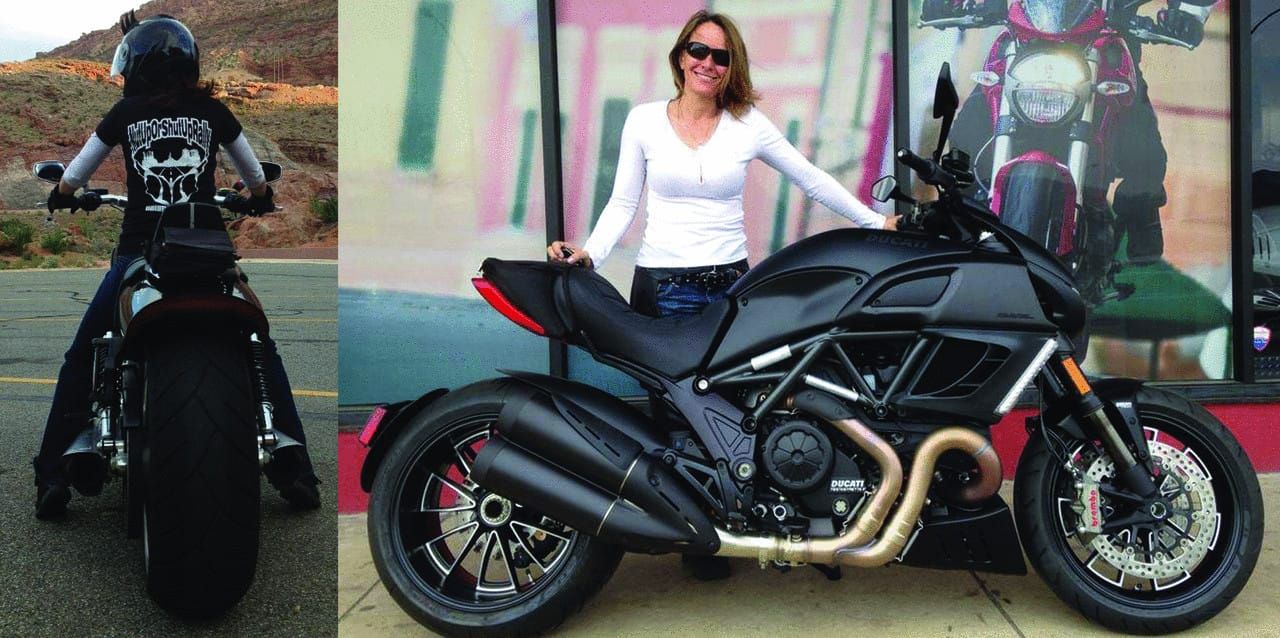
My first comment is to stop comparing these bikes. They are about as similar as a rock song from the 1980s to an upbeat classical movement. Instead of reading reviews on the bikes, simply take them both for a test ride. If it does not become immediately apparent which style of riding is right for you, then please read on.
The major difference between the two bikes is about 50 years of technological advancement. The V-Rod is a big deal in the cruiser world. It was far more advanced than the standard Harley engine, yet it was never meaningfully evolved beyond its introduction model. Ducati seems to be constantly fine-tuning its machines while Harley sticks with what is working to sell motorcycles.
The V is gorgeous and features the best design lines I have ever seen in a production motorcycle. However, I have never had a moment where I found myself missing the riding experience. Not even one. She is ridiculously heavy and very wide at the seat. The ergonomics are horrible with the clamshell riding position (the stock setup can be enhanced with a riser and optional mids on some models). It becomes tiresome on the body after a few hours in the saddle—right shoulder if you’re taller, hips if you’re shorter. The Diavel has a better riding position, but it is cramped in the leg area. The ride itself is far stiffer, making long rides unpleasant. I’ve done the 1,000-mile-in-a-day Iron Butt SaddleSore on my Muscle and have laid down a few multi-day rides of 350 to 450 miles on the Diavel. Neither is what I’d call “comfortable,” yet I’d take the Diavel over the V-Rod for any ride.
Mechanically, I’ve had some fairly serious issues with both bikes, and they were both rather dangerous. I found Harley-Davidson service departments to be very friendly and helpful (I’ve been very lucky with my dealer relationships). Ducati dealerships were a definite challenge; however, once established, I experienced the best service of any brand I’ve owned.
I’ve put both bikes through harsh 115-degree desert heat and the subfreezing temperatures of the Rocky Mountains, from long highway stretches to tight, twisty canyons, and agonizingly slow parade rides to flat-out, spank-the-boys fast. I could feel the Harley’s outer limits when she wasn’t digging the weather conditions and definitely tapped out her performance. Outside of disliking slow speeds and low RPMs (such as parade rides), the Diavel always acted like she was happy to be out riding, could continue to do so all day, and always had more to give than I had the nerve to attempt, regardless of the conditions. It is a much more flexible engine—a shocking discovery, as I anticipated a far more persnickety machine.
Neither the V nor the Diavel are true 2-up bikes. There’s enough of a backseat to give someone a lift for short distances, but it is wholly unrealistic to think your passenger will enjoy an all-day ride on either bike. I host long-distance riding events and have had 2-ups on V-Rods; a happy passenger on that bike is a rare unicorn you will likely never encounter. The Diavel is a great passenger show-off machine for a quick thrill.
Yes, the stock sound of the Diavel is horribly bad, but it should be noted that the stock sound on the V-Rod is rather like a sewing machine as well. I had V&H slip-ons for the Muscle, which brought the notes out far more aggressively, especially upon deceleration. I’ve put the full Termignoni exhaust system with tune on the Diavel to reduce the rocking-horse throttle protest at parade speeds. While it rounded out the low-end lag, the raw power came through more aggressively in a uniquely sophisticated sound I adored but found too much for domestic neighborhoods. However, the Ducati will never like the low RPMs that Harleys tolerate so well. They’re simply two different engine designs and need to be ridden as such—in two entirely different manners.
The V-Rod is a long, slow puller while the Diavel is instant gratification. The V is heavy in turns, and although I could carve canyons with the best of them on it, I can drop a V-MAX in the twisties on the Ducati. The Harley reaches the limit of performance about where most cruisers max out, which is exactly when the Diavel wakes up and comes to life.
Cruiser riders will want to take note of a few particulars of the Diavel, as it is a different class of bike. One is the ridiculous improvement in braking. The Harley brakes require a long, slow effort to reduce speed. The Diavel is designed to stop. Caution should be given to those first few brake squeezes—learn to go from fistfuls to fingerfuls. Not an exaggeration. The same applies to the throttle. Don’t throw it in Sport mode and take off like you know what you’re doing when you don’t (like I did); she’ll easily pop a wheelie shifting into third gear without intention. False neutrals are real and can make a cruiser rider believe there is something seriously wrong with the Diavel’s transmission. Most likely, there is not (except for some rare warranty issues in early models). The Diavel may be difficult to get into neutral for the first 1,000 miles or so. Surprisingly, the Ducati does not appreciate soft, finessed shifts, almost demanding a firm, hit-it-like-you-mean-it shift, whereas the Harley can tolerate a softer touch. Sticky sport tires wear out much faster on the Ducati and with seemingly no warning. Minimal aftermarket products currently exist for the Ducati, and service centers can be few and far between. The nearest one to me is a four-hour trip. One way.
The biggest difference between these two bikes is what they require of the rider. The V-Rod is all about moving a comparatively massive heavyweight and demands serious commitment when taking her to speed. 140 mph is completely different on that bike than on the Diavel. Completely different. The V-Rod engine enjoys about 80 to 85 mph and will smoothly do 90 to 110, but every mile-per-hour increase over 125 changes the ride dynamics considerably, and at 140 mph it requires 110% of your focus. I understand 140 is about the top speed, which is very respectable for a stock Harley.
The Diavel, on the other hand, is most happy at 95 to 110 mph, with minimal noticeable difference in engine delivery as it shoots up to 140 in an easy-breezy, this-is-going-to-get-me-in-trouble kind of way. The 41-degree lean angle of the Diavel, while not impressive for a sport bike, is quite impressive compared to the 32 degrees of the V-Rod. For a rider new to sport-bike geometry, this is a stunning difference once fully experienced. Having fun on Million Dollar Highway with no traffic and warm pavement felt like an outright G-force rollercoaster ride, which was great fun until I got off the bike and realized I had eaten the tire down to a quarter inch from the rim—well beyond my previous riding capabilities. The lightweight Diavel makes it incredibly nimble in corners, and dropping a knee or hip feels natural. Not so much on the Harley.
Perhaps the biggest difference between the two bikes is in the history of the manufacturers themselves—the basic DNA running through these machines. There is no getting around the cruiser feel of the V being relaxed, beautiful, but heavy and slow. There is no escaping the sport history in the Diavel, with performance abilities requiring a stiff suspension, touchy throttle, and dramatic protests at low RPMs. They are simply two different worlds to ride.
In my humble opinion, although the V-Rod will always remain a favorite street bike in my heart, with the best design lines on the market, the Diavel delivers the performance boasts often claimed by Harley-Davidson. The performance between the two cannot be compared, and it is annoying to hear the market lump the bikes into the same category. Although the XDiavel’s claim of being a “technocruiser” is more accurate than “power cruiser,” it still is not the cruiser experience. It is superior technology in a bike that is somewhat like a cruiser. Sort of—if you use your imagination.
A passenger will enjoy the back of the V-Rod more than the Diavel but will still likely be uncomfortable for more than an afternoon ride. If you want to carry luggage, surprisingly, I found the smaller passenger seat on the Diavel easier to load with a few weeks of gear due to clever bungee attachment points. The Diavel does come with some luggage options, though I found them subpar for real distance (five to ten days). Gas tanks are about the same size, although the Diavel gets far better mileage—even when playing pro racer. The Ducati has a chain, which can bother some maintenance-averse riders while thrilling those who enjoy the sensation of being shot out of a rocket. Both sport huge rooster tails in the rain due to minimal rear fenders, leaving you drenched. I found they both handled wind well for different reasons: the V due to its heavy weight, and the Ducati due to ease of throttle and lean technique. The Diavel is far more electronically sophisticated but still allows a rider like me to ride it as though it had none of those features. Personally, I detest most modern technology trying to do the riding for me, taking time to learn how to operate it—or how to shut it off. I just want to start the bike and go riding, all day, every day, for weeks at a time. A real surprise was finding the cost of ownership between the two to be quite similar.
If anyone would like more details, I’ve got them—both in terms of the riding experience and mechanical issues.
As for the question I am constantly asked—“Which bike is better?”—my response is to ask which discomfort you prefer: a body-aching clamshell riding position, or a body-beating, stiff, rough ride?
There is your answer.
Samantha Bonsack is a writer based out of Moab, Utah, hosts the NUT-UP OR SHUT-UP *RIDING* Rally, is a patched member of a local MC, the Motor Maids, Patrioit Guard Riders, and an Iron Butt SaddleSore (1,000 miles in a day) rider